
Some days, it feels like every headline is another setback.
It can seem like causes we’ve spent decades advancing are suddenly being questioned again, like conversations we’ve had a hundred times have just gone nowhere. It’s discouraging. We get it.
It’s easy to start asking difficult questions.
Is anyone paying attention?
Is anyone still fighting for change?
Is anything actually getting better?
At CAASE, we understand those questions. We’ve asked them, too.
But we also understand something else: meaningful, lasting change doesn’t always make headlines.
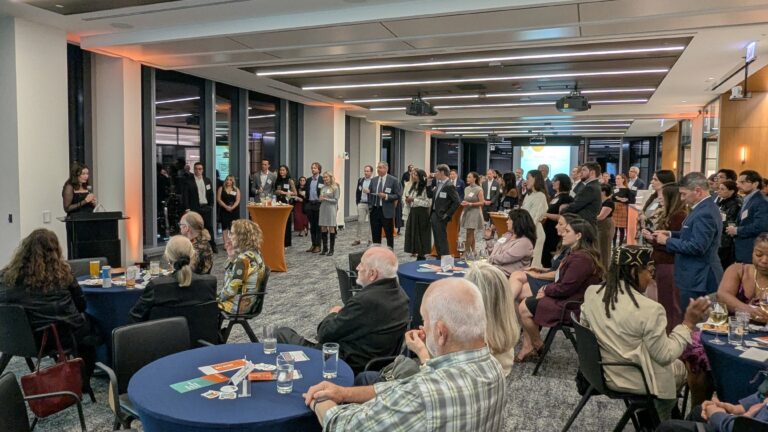
While public attention shifts from crisis to crisis, people across our communities continue to show up every day to support survivors, prevent harm, and build safer futures. In private. In small groups. In courtrooms and in classrooms.
For almost 20 years, CAASE has worked toward a world free from sexual harm and exploitation. During that time, we’ve become one of Chicago’s leading voices for survivor-centered change, combining legal services, prevention education, policy advocacy, and community engagement to address sexual harm from multiple angles.
We’ve helped shape laws and policies that strengthen protections for survivors. We’ve provided direct legal services to survivors seeking safety, justice, and stability after experiencing harm. We’ve taught more than 45,000 teens how to practice consent through programs in Chicago schools. And we’ve mobilized hundreds of community members who believe survivors deserve more than sympathy—they deserve action.
By the time a survivor comes to CAASE for support, they’ve often been failed already by multiple systems. Family, school, work—places where they’re supposed to feel belonging and where they have a right to be safe. Survivors deserve better than that.

That’s why, when seven women came forward to file lawsuits exposing an ongoing crisis of sexual assault, harassment, and institutional retaliation at Logan Correctional Center, the innovative, dedicated attorneys on our Legal team stepped up to support them.
It’s why, when survivors speak up and tell their stories, our Community Engagement team makes space for them to be heard. We hold writing workshops, open-mics, and listening sessions so we—and our community—can work with survivors to give them what they want, rather than what we think they need.
And it’s why we’re launching our new campaign to remind the world again and again and again: Survivors Deserve Better.
They deserve better than silence. Better than blame. Better than systems that ask them to carry the burden alone.
They deserve justice. They deserve community. They deserve healthy relationships. They deserve laws that help. They deserve our support. We’re doubling down on what we know survivors deserve and what we’ve always fought to provide them.
Our work is possible because of the bravery of survivors who trust us to do right by them. And it’s possible because of the support we get from people like you who refuse to give up. Between now and the end of the year, we aim to raise $125,000 to help survivors get the justice and peace of mind they deserve.
So join us.
- You can make a donation to CAASE. Make it monthly and make your impact last.
- Join our Young Professionals Board. Get involved directly in CAASE’s cutting-edge work.
- Follow the campaign. Find us on Instagram and LinkedIn at @thecaase and help us cut through the noise by sharing and reposting our updates to help us connect with other allies who are eager to join the fight.
If you’re feeling angry, let that anger remind you what matters.
If you’re feeling discouraged, know that you’re not alone.
If you’re wondering whether anyone is doing anything to make a difference, the answer is yes.
Every day, survivors come forward looking for justice, for support, for peace of mind. Help us help them get it. Help us give them more than what they’ve gotten so far.
Over the coming months, you’ll hear stories of resilience, progress, and the work still ahead. We hope you’ll follow along—because survivors deserve so much better.
This piece was authored by Ryan Spooner and edited by Lizzy Springer. Learn more about our staff.